
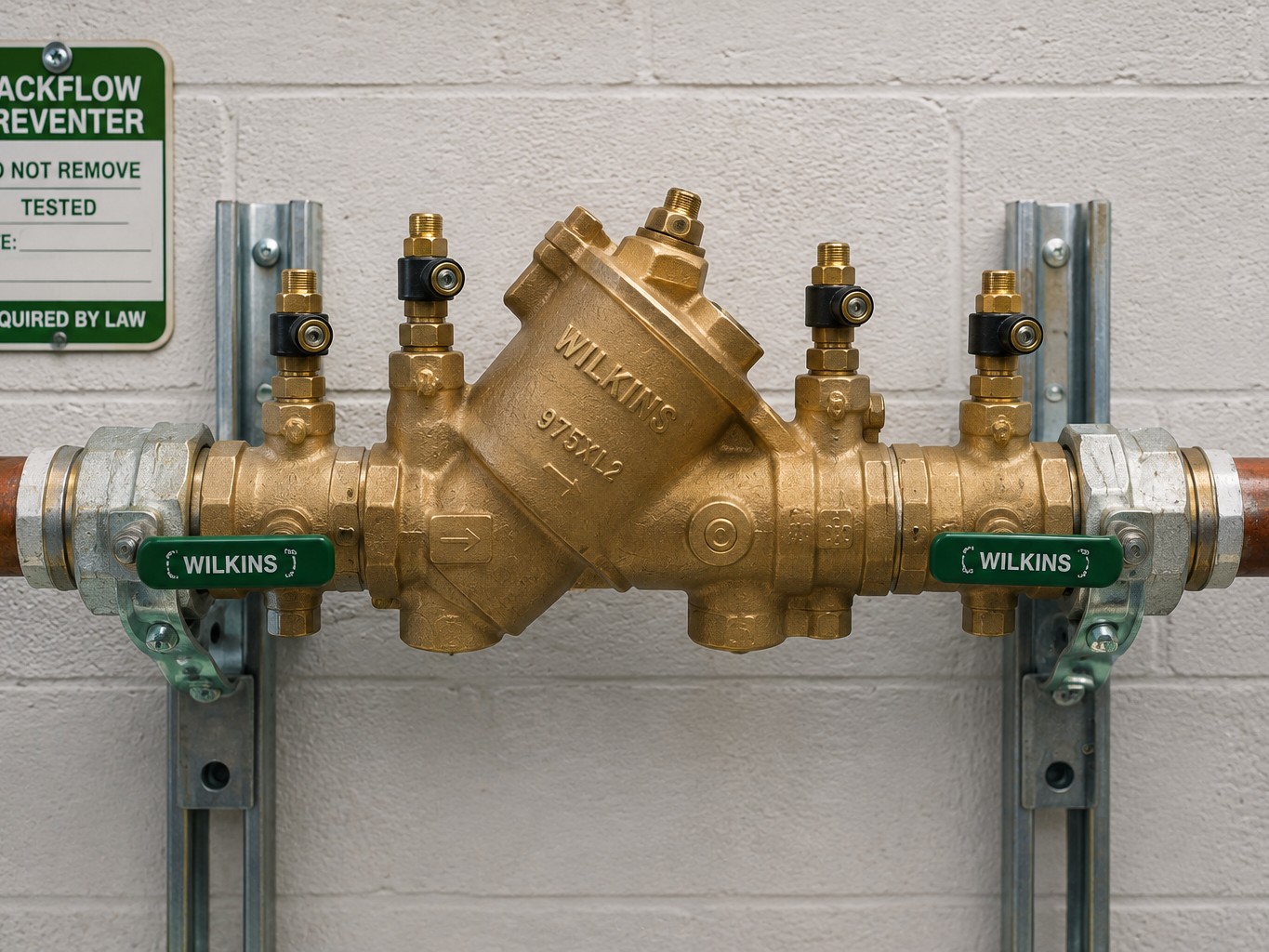
regulatory
EPA Cross-Connection Control Requirements, Explained
Pete Volk · August 19, 2026 · 4 min read
The short answer: There isn't a single federal rule that tells every backflow tester in the country what to do. The EPA provides guidance and best-practice recommendations under the broader Safe Drinking Water Act framework, but actual cross-connection control programs — testing frequency, certification requirements, who enforces what — are set by individual states, and often by individual municipalities and water utilities within those states. If you're trying to find "the" federal testing requirement, it doesn't exist; the real answer is always "check your local water authority."
What the EPA actually says
The EPA's own guidance is explicit about this decentralization: cross-connection and backflow prevention programs "vary by state and municipality," and the agency points testers and utilities toward state drinking water programs, plumbing authorities, and local health departments for the specifics that actually apply to them. The EPA's role is to define what a well-run program looks like structurally, not to mandate one uniform national ruleset.
The four components EPA outlines for an effective program
According to EPA's Distribution System Toolbox guidance, a cross-connection control program should include:
- Legal authority — the water utility needs the actual authority to require customers to install and maintain backflow prevention assemblies, typically established through local ordinance.
- Trained, certified personnel — staff (or contracted testers) trained and certified specifically in testing backflow prevention assemblies and understanding distribution system operations.
- Recordkeeping — documented testing history, repairs, certifications, and assembly inspections, so compliance can actually be verified rather than assumed.
- Public education — making sure customers understand the health risk cross-connections pose and their own role in maintaining compliance.
Separately, EPA notes that sanitary surveys — inspections of a water system's overall safety practices — occur at least once every three years for community water systems, though this is a broader water-system requirement, not a backflow-specific testing interval.
Why certification isn't the same everywhere
Backflow tester certification follows the same decentralized pattern. ASSE International, through its ASSE 5000 series, is the most widely referenced national standard — ASSE 5110 specifically defines competency requirements for backflow prevention assembly testers — but not every state accepts ASSE 5110 certification on its own; some require an additional state-specific exam on top of it. The American Water Works Association (AWWA) publishes guidance utilities use to structure their own programs, and the USC Foundation for Cross-Connection Control and Hydraulic Research is another widely cited influence on program design, though neither has direct enforcement authority.
In practice, the training-to-certification path typically looks like: a training course (commonly ranging from 8 hours to 40+ hours depending on the jurisdiction), a written exam covering assembly mechanics and testing procedures, a hands-on practical exam demonstrated on at least two assembly types, and an application submitted to whichever authority actually issues the credential in that area. Renewal is typically required every two to three years, usually with continuing education. California is a useful example of just how much this varies: rather than a single statewide license, certification there is administered through individual local water utilities.
What this means for your business
If you test across multiple water authorities — even within the same state — don't assume a due date, a required assembly type, or a certification that satisfies one utility automatically satisfies another. The practical habit worth building: confirm the specific requirements of each water authority you work under directly, rather than relying on a general understanding of "the rules," since the rules genuinely differ by jurisdiction in this category more than most trades.
Frequently asked questions
Does the EPA require backflow testing nationwide? No. The EPA provides guidance on what an effective cross-connection control program should include, but actual testing requirements — frequency, who must comply, enforcement — are set at the state and local level, not by a single federal rule.
What certification do I need to test backflow assemblies? It depends on your state and often your specific water authority. ASSE 5110 is the most widely referenced national competency standard, but some states require additional state-specific exams, and some administer certification entirely through local utilities rather than a state board.
How often do sanitary surveys happen? EPA guidance calls for sanitary surveys — inspections of a water system's overall safety practices — at least once every three years for community water systems. This is a broader water-system requirement and separate from device-specific backflow testing intervals, which are set locally.
Sources: EPA — Cross-Connection Control and Backflow Prevention (Distribution System Toolbox fact sheet) · Backflow Authority — Backflow Tester Certification: Requirements by State
Ready to stop losing renewals?
We're taking founding customers now — locked-in pricing and a direct line to the person building it.
Get Early AccessMore from the blog
business-growth
How to Start a Backflow Testing Business
A practical overview of what it actually takes to start a backflow testing business — certification, insurance, equipment, building a customer base, and the systems that keep it running.
business-growth
How Many Devices Can One Tester Manage Profitably?
A working framework for estimating how many backflow devices a solo tester or small crew can realistically and profitably manage, and the levers that move the number most.
syncta
How to Export Your Data From Syncta (Step-by-Step)
A practical guide to getting your customer and device data out of Syncta and into a new system — including exactly how CrossConnectHub's import wizard handles a Syncta-style export.